
Curriculum overview
Collective Futures offers a challenging yet balanced program. About half of your time you will work in a team on a complex, multifaceted project. The approach is transdisciplinary: you’ll work across and beyond academic fields, together with societal partners.
Project work is interwoven with a variety of activities — workshops, lectures, coaching, sports, and creative practices — that help you navigate complexity, deepen your learning, and prepare you for a career that makes a difference.
A unique element of the program is that some activities are co-organized by you and your fellow students. With a dedicated budget, you’ll have the chance to tailor parts of the program to your interests and learning needs.
Where and when it takes place
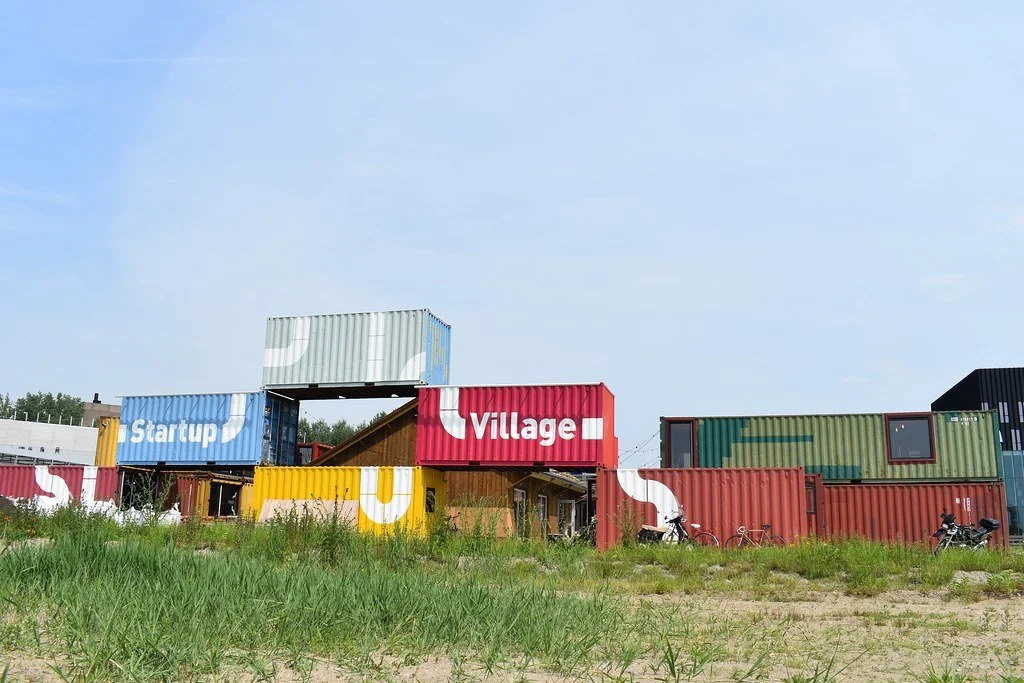
The program runs every weekday from 9:00–17:00, supported by a dedicated office space at Startup Village Amsterdam for project work, self-study, workshops, coaching, and peer learning. This shared daily rhythm and workspace help foster both structure and a supportive community where collaboration and trust can grow naturally.
Educational approach
Collective Futures unfolds as an integrated learning journey, designed around six interrelated learning tracks that adapt to the needs of students and projects.
The program combines learning by doing, reflecting and connecting. You’ll gain hands-on experience with real challenges, while also building the self-awareness, resilience, and clarity needed to guide your professional path.
This design means you don’t just “do a project”. You develop the capacities and vision to carry into whatever comes next.
Curriculum
The curriculum combines activities and workshops led by experts from both within and beyond UvA. Each year it evolves to match the needs of students and the real-world challenges at hand. Below you’ll find an overview of key skills and abilities connected to each learning track.
-
Learn to understand and design for change in complex systems and societies.
Complexity Science and Social Change
Transition Design with DRIFT for Transitions
Thinking in Systems
Principles of Regenerative Design
Foresight Methods and Scenario Building
-
Develop the ability to collaborate across disciplines, cultures, and sectors.
Foundations of Transdisciplinary Collaboration
Teamwork, Trust, and Conflict Navigation
Growing Developmental Team Cultures
Facilitation and Stakeholder Engagement Skills
-
Grow your capacity to guide projects with clarity, creativity, and presence.
Writing Clear and Compelling Reports
The Art of Powerful Questions
Improvisation and Presence through Theatre (CREA, 5 sessions)
Presentation Mastery
Visual Thinking
Storytelling for Change
-
Gain insight into where your talents and values meet the needs of the world.
Understanding Your Values, Talents, Skills, and Passions
The Psychology of a Fulfilling Career
Entrepreneurship and Intrapreneurship Fundamentals
Authentic Networking and Professional Presentation
-
Build the tools to manage complex projects and produce rigorous, relevant results.
Defining and Structuring Complex Projects
Using AI for Research and Analysis
Project Management Essentials
Personal Knowledge Management
Qualitative Research and Stakeholder Interviewing
-
Deepen your self-awareness, resilience, and embodied presence as a learner and collaborator.
Developing Emotional Intelligence
Cultivating Resilience for Uncertain Times
Mindfulness for Focus and Presence
Embodied Critical Thinking and Understanding
Transactional Analysis for Self and Teams
Nature Immersion for Reflection and Renewal
Coaching and Intervision
Ethics and inner-led change
What’s included in the program?
Project Work and Self Study
Your main work involves analyzing complex challenges, designing your methodology, and building a compelling project vision in partnership with external organizations.

Workshops and Lectures
These offer essential skill-building and are led by internal and external experts on topics like transition design, systems thinking, project management, peer collaboration, storytelling, and presentation.

Coaching and guided reflection
one-on-one coaching with teachers, team coaching, and peer coaching to support your learning journey. You’ll also keep a reflective journal to track your growth.

Creative practices and field trips
Theater classes and other creative practices to support personal growth and inspire new ways of thinking.

Sports
Weekly sessions — designed in collaboration with USC — blend physical activity, teambuilding, and reflection to support holistic growth.

Peer learning and community building
Weekly feedback sessions, peer coaching, student-led mini-lectures and other shared activities create a supportive environment where you learn with and from each other.

What the week looks like
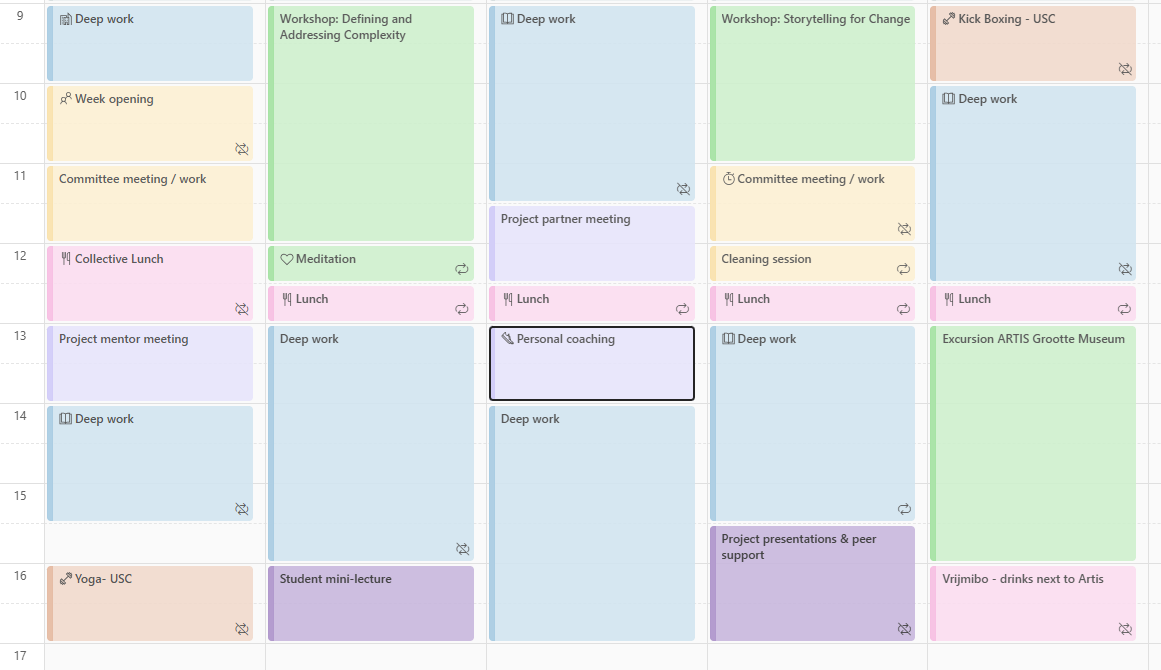
Here’s an example of what a week schedule might look like:
While each week is different depending on your project phase, you can expect a rhythm that blends:
Project ‘deep’ work and self-study (most weekdays)
Workshops & Lectures (2-3 times per week)
Coaching & Guided Reflection (1 time per week)
Sports (1 time per week)
Creative activities & excursions (1 time per week)
Peer learning sessions (1-2 times per week)
Community & committee work (2 times per week)
The program runs daily from 9 AM to 5 PM, making it a full-time commitment. But don't worry, it's not as intense as it sounds! Despite the intensive schedule, students generally do not find this to be an obstacle. The structured timetable ensures that all coursework and assignments can be completed within these hours, leaving evenings and weekends free. Additionally, the program includes various activities and lunch breaks that provide a balanced mix of work, fun, and relaxation.
On top of that, we offer the possibility for one remote working day every two weeks. And you get 3 additional free days that you can use whenever you want.
Two ways to follow the program
Every student starts in the same three-month foundation. From there, you either continue into a two-month implementation phase with the partner, or complete the program with an advisory deliverable. Most students decide which track suits them in conversation with us. What matters is that you know what each one involves before you apply.
-
The 30 EC track is the full expression of the program. You begin in the shared 18 EC foundation, then continue for two more months in what we call the impact phase. The first three months end with a clear direction. The next two are about what happens when that direction meets reality.
The work shifts. You run user tests and small pilots, sit with stakeholders whose interests don't always align, and refine your proposal based on what you learn when it leaves the page. You see which parts of your thinking hold up and which ones needed more humility. You experience the move from advising on a problem to working alongside the people living with it.
This is the part of the program most academic programs never offer. Producing a strong report is a skill. Watching that report survive contact with the world, and adapting as it does, is a different one — and it's the one that tends to stay with students longest. You finish with a tested intervention, the materials a partner needs to carry it forward, and a kind of professional confidence that's hard to develop any other way.
This track suits you if you want the full arc, from early research through to seeing your work make a difference in practice. It asks more of you, and it gives more back.
-
Description texThe 18 EC track is the foundation that every student shares, and a complete program in itself for those who want a focused, three-month experience.
You join a transdisciplinary team and dig into a societal challenge brought in by one of our partner organisations. The work is academic and field research, mapping the system you're working in, and finding the angle where a clear contribution can be made. Because three months is short, you learn to make sharp choices early and stay focused on what matters most.
You finish with an advisory report or strategic framework that gives the partner a direction they can act on.
This track suits you if your Master's only allows for three months, or if you want to get sharper at investigating complex problems and building a solid base of knowledge and method around a real issue.t goes here
Want to know more?
See Frequently Asked Questions for answers to common questions. Also feel free to reach out to us on collective-futures-science@uva.nl.